Claw vs palm grip, and fingertip: what changes in the mouse
Each grip aims a little differently and suits a different shape. The biggest difference in the mouse is where the hump sits and how tall the back is.
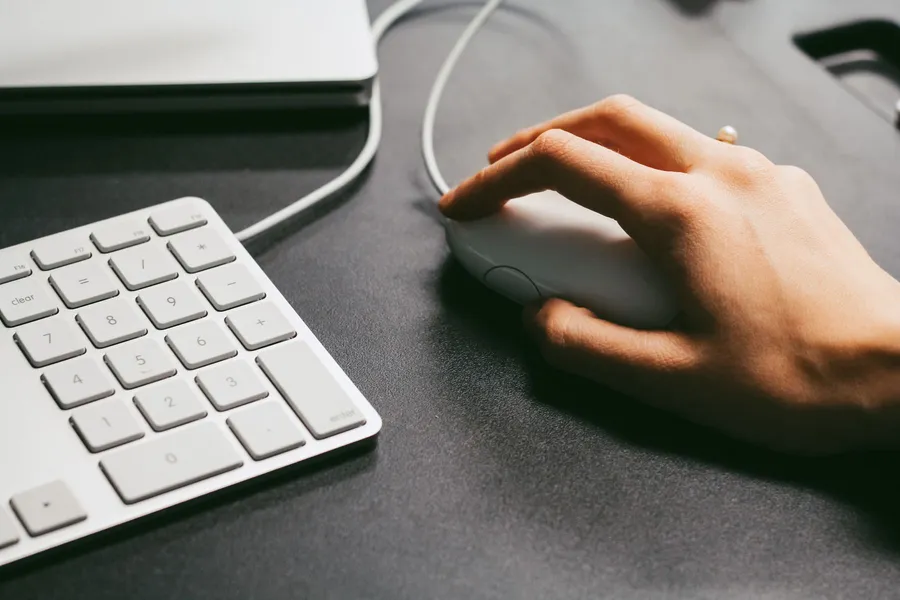
In a palm grip your whole hand rests on the mouse. In a claw grip only the base of your palm touches the back, and your fingers arch over the buttons. Neither is the better grip. Palm is steadier, claw lets the fingers make small corrections, and aim coaches tell players to keep whichever feels natural. Claw vs palm grip also changes the mouse that suits you. For the same hand, the finder puts a claw mouse only 0 to 3 mm shorter than a palm one, and the 15 shapes on our palm and claw lists cover almost the same range, 115.8 to 128 mm for palm and 116 to 128.8 mm for claw. The difference is the hump and the height: the hump sits in the middle on 13 of the 15 palm shapes and toward the back on 13 of the 15 claw ones, and 13 of the claw shapes are under 40 mm tall, against 4 of the palm ones.
Palm, claw, fingertip and relaxed claw
A palm grip lays your palm flat on the back of the mouse and your fingers flat on the buttons. A claw grip braces only the base of your palm on the back, while your fingers bend up and press with their tips, leaving a gap under the middle of your palm. In a fingertip grip the palm stays off the mouse entirely, and your fingertips and thumb do the holding and the steering. A relaxed claw sits between palm and claw: your palm rests on the back and your fingers stay bent.
Is claw grip better than palm?
Not overall, but the two grips aim differently. A palm grip locks your hand onto the shell, which keeps it steady and leaves the wrist and arm to do the moving. Viscose, who teaches aiming on YouTube, puts the cost plainly: with a palm grip you lose the ability to move the mouse with your fingers. That steadiness is why palm is common in tactical shooters, where a still crosshair wins duels. Claw and fingertip free the fingers for small corrections, vertical ones especially, and pay for it in stability, fingertip most of all: Matty, an aim trainer with Voltaic, notes that fingertip players often have to use more grip tension to land smoothly. Claw sits between the two.
None of that picks a grip for you. Matty says the main thing to prioritize in a grip is comfort, and CartoonFPS, an Aim Lab community champion who coaches aim, has seen world records on every grip. Your grip also shifts as you play: you press down to stop a flick and rise onto your fingertips for a small adjustment, often without noticing. Two cases are worth a second look. One is a grip that hurts. The other is a palm grip that keeps missing small vertical corrections, because the fingers can't join in and the arm has to make them.
How the grip changes the mouse
The 15 shapes on each of our grip lists look like this:
| Grip | Length | Height | Where the hump is |
|---|---|---|---|
| Palm | 115.8 to 128 mm | 37.8 to 44 mm | Center on 13, slightly back on 2 |
| Relaxed claw | 116.6 to 129.5 mm | 38 to 44 mm | Center or back: center on 5, back on 10 |
| Claw | 116 to 128.8 mm | 37 to 42.1 mm | Back on 13, center on 2 |
| Fingertip | 85.3 to 121 mm | 31.6 to 42 mm | Back on 10, center on 5; the height matters more |
A palm grip usually suits a hump in the middle, with a back tall enough to fill the hollow of your hand, and how tall that is grows with the hand: 36.7 to 42 mm on our small-hand palm list, 39.7 to 44 mm on the big-hand one. RTINGS and Zowie both say palm users suit a taller back. A claw grip usually suits a hump pushed back to where the base of your palm presses, with a lower front so your fingers have room to arch. Corsair describes the same higher rear hump supporting the heel of the palm.
One shape from near the top of each list shows the difference:
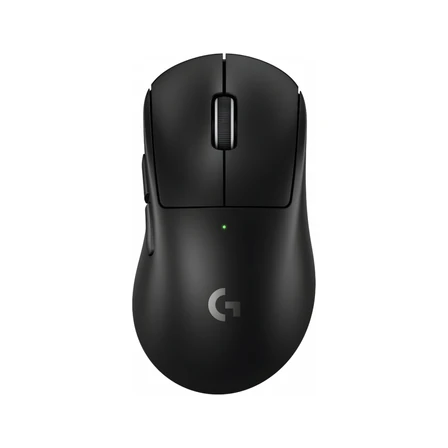
- Weight
- 60 g
- Size
- 125.8 × 67.7 × 43.9 mm
- Connection
- Wireless
This is the palm pick: the hump is centered and the back stands 43.9 mm tall, so a flat palm is supported along its whole length.
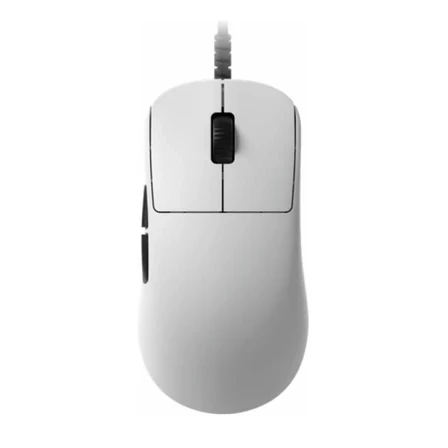
- Weight
- 49.5 g
- Size
- 118.2 × 60.5 × 37.2 mm
- Connection
- Wired
Next to the Superlight 2 DEX, this claw pick is 7.6 mm shorter and 6.7 mm lower, and its hump has moved back to where the base of your palm braces.
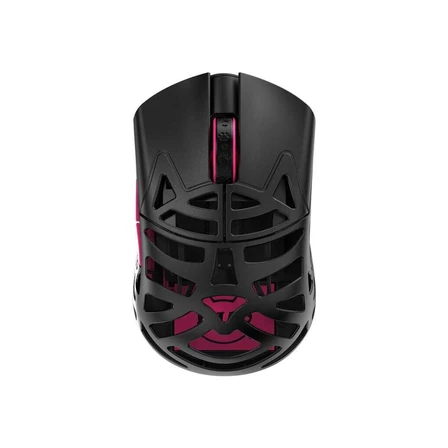
- Weight
- 31 g
- Size
- 91 × 55 × 34 mm
- Connection
- Wireless
At 91 mm and 31 g it's small and light enough to steer with fingertips alone. It's only 34 mm tall, and with the palm off the shell that height matters more than where its hump sits.
Fingertip is the odd one out. With the palm off the mouse, five of the 15 on its list are tiny shells, 85 to 92 mm long, cut off behind the buttons. The rest are longer mice of 105 to 121 mm, because plenty of fingertip players hold a regular-length mouse by its front half, so how short to go is down to taste. Weight counts more here: the fingers move all of it, so the finder ranks fingertip mice over about 50 g lower.
Relaxed claw overlaps both. Its humps sit in the center or toward the back. Its list shares five shapes with the palm list, the Razer DeathAdder V4 Pro among them, and one with the claw list.
The full ranked lists are in our guides to palm grip, claw grip, relaxed claw and fingertip mice.
How to tell which grip you use
Corsair's test is the simplest one: stop with your hand on the mouse and look down at what's touching it. Do it after you've been playing for a while. Then check two things:
- Is there a gap under your palm? No gap means palm. A gap with your palm still on the back means relaxed claw. A gap with your fingers arched high means claw.
- Does your palm touch the mouse at all? If it doesn't, you use a fingertip grip.
If you can't tell, pick "relaxed claw" in the finder. For most hand sizes its length sits between palm and claw, and for a small hand all three are within a millimeter, so it's the safe choice.
Once you know your grip, measure your hand and use the size chart there to get a length.
Questions
Is relaxed claw the same as palm grip?
No. In a relaxed claw your palm touches the back of the mouse, as in a palm grip, but your fingers stay bent instead of lying flat. It suits a hump your palm can rest on, in the center or toward the back.
Can you use a claw grip on a palm mouse?
Yes. It works best when the hump sits behind the center, where the base of your palm can brace. A relaxed claw also works on a centered hump, because your palm can rest on it.
Which grip is best for small hands?
Any of them. For palm and claw, the finder aims for about the same length for a small hand, around 117 mm, and the grip mostly changes where the hump sits. Fingertip is the exception: its length is down to taste, from tiny shells to regular mice held by the front. Start from the lists for small hands in a claw grip or in a palm grip.
Sources
- Is your mouse grip holding you back? (video)youtube.com
- How to find your aiming mouse (video)youtube.com
- All Your Aim Training Questions Answered (video)youtube.com
- Tension Management is KEY (video)youtube.com
- Mouse ergonomics and grip typesrtings.com
- Is a palm grip mouse right for youzowie.benq.eu
- Is a claw grip mouse right for youzowie.benq.eu
- Mouse grips explainedcorsair.com